Preparing for Your Immigrant Visa Consular Interview
Your immigrant visa consular interview is the final major step before receiving a green card as an overseas applicant. Success depends on arriving with the right documents, completing the required medical exam beforehand, and answering the consular officer's questions honestly and calmly. This guide walks you through every stage — from gathering paperwork to understanding what happens after the visa is approved.
What Is the Consular Interview and Why Does It Matter?
When a U.S. citizen or lawful permanent resident petitions for a family member abroad — or when an employer sponsors a foreign worker — the final stage of the immigrant visa process usually takes place at a U.S. embassy or consulate in the applicant's home country. This is called consular processing, and the interview is its centerpiece.
During the interview, a consular officer reviews your application, examines your documents, and asks questions to confirm that you qualify for the immigrant visa you applied for. The officer is checking several things: that the underlying petition is valid, that you don't have any grounds of inadmissibility (such as certain criminal history, immigration violations, or health-related issues), and that the relationship or employment basis for the visa is genuine.
This interview matters enormously because the officer can approve your visa on the spot, request additional evidence, or — in some cases — find you ineligible. Understanding what to expect takes away much of the anxiety and puts you in control of the process.
Who goes through a consulate interview?
- Applicants living outside the United States who are immigrating based on a family or employment petition
- Diversity Visa (DV) lottery winners
- Certain special immigrant visa categories
Applicants already in the United States typically go through a different process called adjustment of status at USCIS — but family members still abroad must use consular processing. For Illinois residents with loved ones overseas, this is the pathway most commonly used to bring spouses, parents, and children to Chicago.
Gathering Your Documents Before the Interview
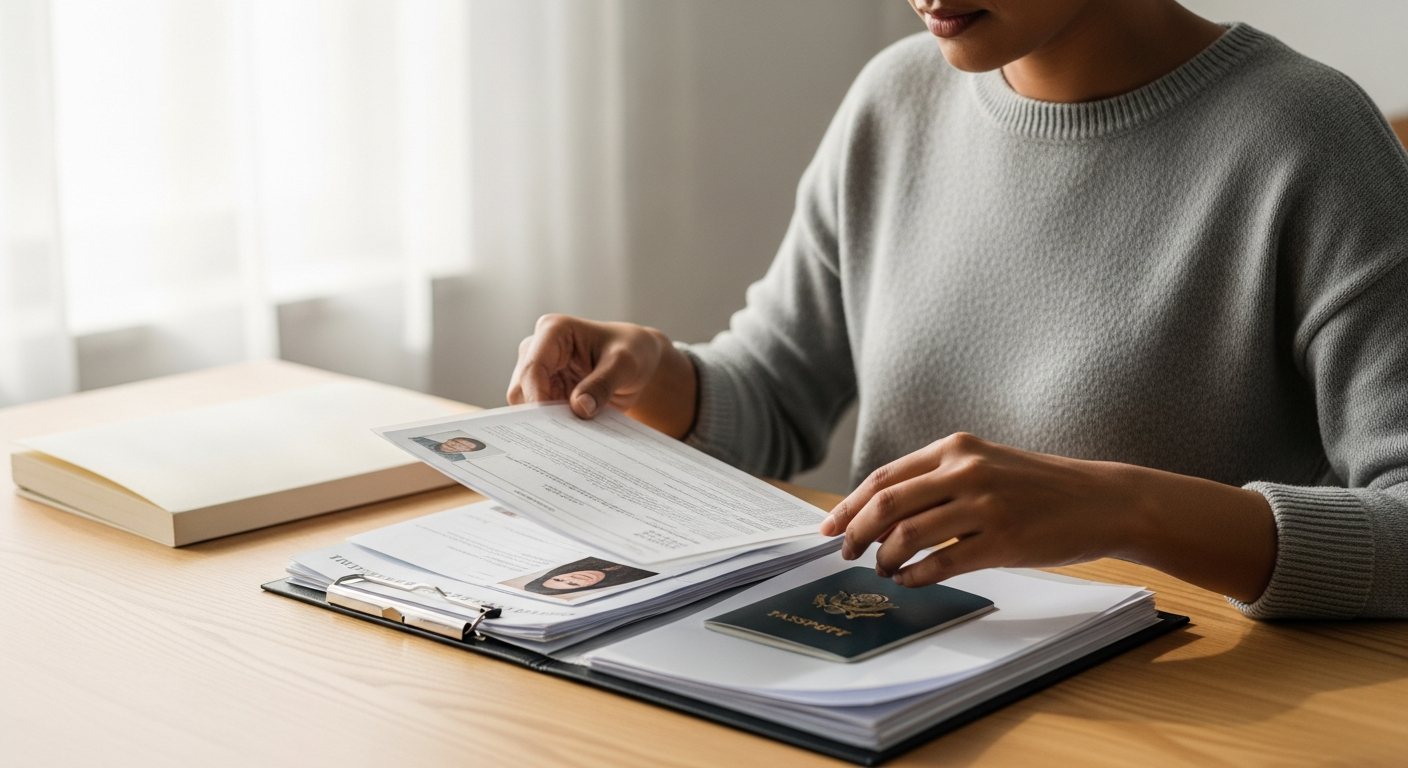
Coming to your interview with a complete, organized document packet is one of the most impactful things you can do. Missing paperwork is one of the most common reasons an interview is put on hold or requires a follow-up appointment.
The National Visa Center (NVC) will send you an interview appointment letter that specifies exactly which documents to bring. Always read that letter carefully and follow its instructions. Below is a general overview of what most immigrant visa applicants need to have ready.
Core documents almost every applicant needs:
- Valid passport — must typically be valid for at least six months beyond your intended entry into the United States
- DS-260 confirmation page — the online immigrant visa application you submitted through the Consular Electronic Application Center (CEAC)
- Civil documents — birth certificate, marriage certificate (if applicable), divorce decrees, adoption records, or any other documents that establish your identity and family relationships
- Police certificates — from every country where you have lived for a significant period; requirements vary by country, so check the NVC's specific guidance
- Two passport-style photographs — taken recently and meeting U.S. visa photo specifications
- Financial support documents — the Affidavit of Support (Form I-864) and evidence of the petitioner's income and assets
- Medical exam results — sealed envelope from the authorized physician (see the next section)
- Petitioner documents — if your petitioner is a U.S. citizen or LPR living in the Chicago area, they may need to provide proof of domicile, such as tax returns, pay stubs, or a lease agreement showing their Illinois address
Tips for organizing your packet:
- Bring originals and photocopies of every document
- Arrange documents in the order they appear on the NVC checklist
- Keep everything in a clear, labeled folder — consular officers process hundreds of applications and appreciate well-organized presentations
- If any document is not in English, bring a certified translation along with the original
For official document requirements by visa category, visit the State Department's immigrant visa page at travel.state.gov.
The Medical Examination: What to Expect and When to Schedule It
Before your consular interview, you must complete a medical examination performed by a physician authorized by the U.S. embassy or consulate in your country. This is not optional — your visa cannot be approved without it.
The purpose of the medical exam is to identify any health-related grounds of inadmissibility under U.S. immigration law. The exam screens for certain communicable diseases of public health significance, required vaccinations, physical or mental health conditions that might pose a danger to others, and drug abuse history.
What the exam typically includes:
- Review of your vaccination records and administration of any required vaccines you're missing
- Blood tests
- Chest X-ray (for applicants above a certain age)
- Physical examination
- Mental health screening
Practical tips for the medical exam:
- Schedule early. Results are valid for a limited period. If too much time passes between your exam and your interview — or between your interview and your visa being issued — you may need to repeat part of the process. Check current validity periods with your consulate.
- Bring your vaccination history. Having your immunization records ready can save you from receiving duplicate vaccines and may speed up the appointment.
- Bring your passport. The civil surgeon needs to verify your identity.
- Expect the sealed envelope. After the exam, the authorized physician gives you a sealed envelope containing your medical results. Do NOT open it. Hand it to the consular officer at your interview exactly as you received it.
- Budget appropriately. Exam fees vary by country and by which vaccinations you need. Check with the specific authorized physician for current costs.
For a list of authorized physicians in your country, use the embassy or consulate website for the country where you are applying. The State Department maintains these lists at travel.state.gov.
Common Interview Questions and How to Prepare
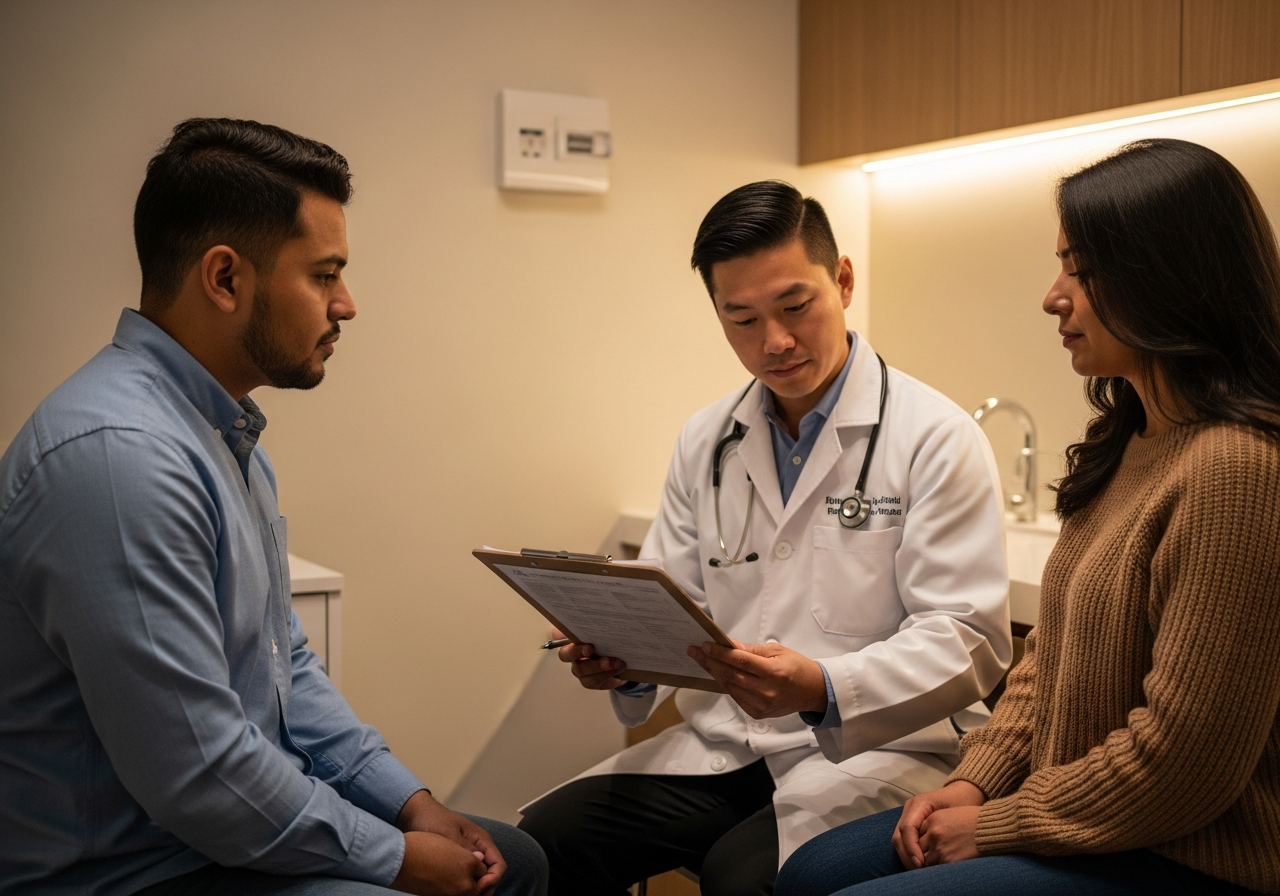
The interview itself is typically shorter than most people expect — often 10 to 30 minutes. The consular officer is not trying to trip you up; they are verifying that your application is truthful and complete. Calm, honest, and concise answers serve you far better than over-explained or rehearsed-sounding responses.
Typical questions for family-based applicants:
- How did you meet your petitioner (spouse, parent, sibling)?
- When did you get married, and where was the wedding?
- Describe your daily life together or how you maintain your relationship across the distance
- What do you know about your spouse's home, job, and family in the United States?
- Have you ever been arrested, charged with a crime, or had any immigration violations?
- Have you ever been a member of a political or military organization?
- Are you currently in good health?
Typical questions for employment-based applicants:
- What is the job you have been offered?
- What are your qualifications and work experience in this field?
- Where will you be working, and who is your employer?
- Do you intend to work for this employer upon arrival?
How to prepare:
- Review your DS-260. The officer will have a copy of everything you submitted. Your answers in the interview must be consistent with what you put in writing.
- Know your case details. Be familiar with the petitioner's address, place of employment, and how long the petition has been pending.
- Be honest about your history. If you have a prior arrest, immigration violation, or health issue, consult with a qualified immigration attorney before your interview. Attempting to hide disqualifying information is far more damaging than the issue itself.
- Bring supporting evidence of your relationship. For spousal petitions, bring photographs, communication records, travel records, and any other evidence that your relationship is genuine — even if these weren't specifically requested.
- Dress professionally. Your appearance communicates that you take the interview seriously.
For Illinois-connected families, one useful piece of evidence is documentation showing the petitioner's life in the Chicago area — utility bills, a lease at a Chicago address, photos taken in recognizable Chicago settings, or records from Illinois-based employers. This kind of concrete, place-specific evidence can help an officer quickly confirm the reality of the petitioner's domicile.
After the Interview: Approval, Administrative Processing, and What Comes Next
After your interview, one of several things will happen.
Visa approved at the interview In many cases, the officer will tell you that your visa has been approved before you leave the window. Your passport will be collected for visa printing and returned to you — along with a sealed immigrant visa packet — within a few days, depending on the consulate's procedures.
Administrative processing Sometimes the officer cannot make a decision on the spot. This is called administrative processing (sometimes referred to as a "221(g) refusal" in the short term, though that designation does not always mean a final denial). The officer may request additional documents or refer your case for further review. This can take anywhere from a few weeks to several months. You can check the status of your case through the CEAC portal. The State Department provides general guidance on administrative processing at travel.state.gov.
Visa refused If the officer finds you inadmissible or determines that you do not qualify, they will give you a written notice of the reason. Depending on the ground of refusal, waivers may be available. Speaking with an immigration attorney is strongly recommended in this situation.
Using your immigrant visa to enter the United States Once you receive your visa, you will also receive a sealed immigrant visa packet. This packet is for the CBP officer at the U.S. port of entry — do not open it. When you arrive at a U.S. airport or border crossing, the CBP officer will inspect your documents and admit you as a lawful permanent resident.
Your green card itself is not handed to you at the border. After you enter the country, USCIS mails your physical Permanent Resident Card to the U.S. address you provided. For immigrants who listed a Chicago-area address, that card will typically arrive within a few weeks of entry. If it doesn't arrive in a reasonable time, you can check its status or file for a replacement through USCIS.
Important steps after arrival:
- Keep a copy of your visa stamp and entry stamp as proof of your lawful admission while you wait for the green card
- Update your address with USCIS if you move before the card arrives
- Begin collecting documents you will need in the future, including your Social Security number (you can apply after arrival) and Illinois state ID or driver's license
- Be aware of your green card's conditions: some applicants — particularly those married for fewer than two years at the time of approval — receive a conditional green card and must file to remove those conditions within a specific window
For immigrants settling in the Chicago area, the USCIS Chicago Field Office serves Illinois residents and handles in-person matters such as infopasses and certain card-related requests. Their contact information and appointment scheduling are available on the USCIS website.
Key Takeaways and Next Steps
Preparing thoroughly for your immigrant visa consular interview dramatically increases your chances of a smooth, successful experience. Here is a concise summary of what matters most.
Do this well before your interview:
- Confirm your interview date and location through the NVC or CEAC portal
- Schedule and complete your medical exam with an authorized physician — and do not open the sealed results envelope
- Gather all civil documents and obtain certified translations for anything not in English
- Ensure the petitioner (your U.S.-based family member or employer) has completed and sent the Affidavit of Support with supporting financial evidence
- Review your DS-260 application so your interview answers are consistent
Do this at the interview:
- Arrive early with your full document packet organized and accessible
- Hand over the sealed medical exam envelope as directed
- Answer questions honestly, clearly, and concisely — do not volunteer unnecessary information, but do not withhold truthful answers
- If you don't understand a question, politely ask the officer to repeat or clarify it
Do this after approval:
- Do not open your immigrant visa packet — it is for the CBP officer at the U.S. port of entry
- Enter the United States before your visa's expiration date
- Update your USCIS address if necessary and wait for your green card to arrive by mail
When to consult an immigration attorney: If your case involves any complicating factors — prior immigration violations, criminal history, prior visa denials, complex family situations, or a prior period of unlawful presence in the United States — getting professional legal guidance before your interview is genuinely worthwhile. The consular interview is not the place to discover that you have an unresolved legal issue.
This article is general information only. Every immigration case is different, and nothing here constitutes legal advice or guarantees any particular outcome. For questions specific to your situation, speaking with a licensed immigration attorney is the best step you can take.
Frequently Asked Questions
The editorial team researches and writes plain-language immigration information, drawing on official government sources and reviewing each page for clarity and accuracy.
Sources & Citations
- [1]Official Government Source: U.S. Department of State — Immigrant Visa Process Overview
- [2]Official Government Source: USCIS — Consular Processing
- [3]Official Government Source: USCIS — Conditional Permanent Residence
- [4]Official Government Source: USCIS — Chicago Field Office
More immigration insights
Insights

Need help with your immigration case?
Our experienced Chicago immigration attorneys offer flat-fee consultations to review your case and outline clear next steps.
Request a Consultation