I-130 Family Petition Processing Times, Explained
Form I-130 processing times depend on two big factors: whether your family member qualifies as an 'immediate relative' of a U.S. citizen or falls into a preference category, and — for preference categories — how long the visa line is for their country of birth. Immediate relatives generally wait only for USCIS to approve the petition; everyone else must also wait for a visa number to become available through the monthly Visa Bulletin.

What Is the I-130, and Why Does It Start the Clock?
Form I-130, the Petition for Alien Relative, is the document a U.S. citizen or lawful permanent resident (LPR) files to tell the government: 'I have a qualifying family relationship with this person, and I want to sponsor them for a green card.' Think of it as placing your relative's name in line — officially and on the record.
Filing the I-130 is almost always the first formal step in the family-based green card process. USCIS reviews the petition to confirm that the relationship is real and legally qualifying. But approval of the I-130 does not, by itself, give your relative a green card or even the right to apply for one immediately. What happens next depends entirely on which category your relative falls into.
The date USCIS receives your properly filed I-130 becomes your relative's priority date. That date is stamped on the approval notice and travels with your relative throughout the entire immigration process. For people in preference categories (explained below), the priority date determines where they stand in line for a visa number. The earlier the priority date, the closer they are to being able to move forward.
Because the priority date is so important, filing as soon as you are eligible — and filing correctly the first time — genuinely matters. An incomplete petition that gets rejected and must be re-filed loses that original receipt date, and with it, potentially months or even years of waiting time.
Immediate Relatives vs. Preference Categories: The Biggest Fork in the Road
U.S. immigration law draws a sharp line between two groups of family-based applicants. Understanding which side of that line your relative stands on is the single most important factor in predicting how long the process will take.
Immediate Relatives of U.S. Citizens
The law defines 'immediate relatives' as:
- Spouses of U.S. citizens
- Unmarried children under 21 of U.S. citizens
- Parents of U.S. citizens (when the petitioning citizen is at least 21 years old)
Immediate relative visas are not subject to an annual numerical cap. This is the key distinction. As soon as USCIS approves the I-130 petition — and, if the applicant is abroad, the National Visa Center finishes processing the case — the applicant can move forward to the next stage without waiting for a visa number to open up. For this group, total wait times are driven primarily by USCIS adjudication times and consular or adjustment-of-status processing, not by a quota line.
Preference Categories
Every other family relationship falls into one of four preference categories, each with its own annual numerical limit set by Congress:
| Category | Who Qualifies |
|---|---|
| F1 | Unmarried adult children (21+) of U.S. citizens |
| F2A | Spouses and unmarried children (under 21) of LPRs |
| F2B | Unmarried adult children (21+) of LPRs |
| F3 | Married children of U.S. citizens |
| F4 | Siblings of adult U.S. citizens |
Because Congress caps the number of preference visas issued each year, demand from applicants around the world can easily exceed supply. When that happens, a backlog builds, and applicants must wait — sometimes for many years — until their priority date becomes 'current.' This is where the Visa Bulletin enters the picture.

How to Read the Visa Bulletin (Without Getting Lost)
The Visa Bulletin is a monthly publication from the U.S. Department of State. It tells applicants whether a visa number is currently available for their category and country of birth. You can find it at travel.state.gov. Here is what you need to know to read it.
Two Charts, Not One
The Visa Bulletin contains two separate charts for family-based cases:
- Chart A (Dates for Filing): Shows the earliest priority date that may be eligible to file adjustment-of-status forms (if USCIS determines this chart may be used that month). This is sometimes called the 'filing date' chart.
- Chart B (Final Action Dates): Shows the priority date that must be reached before a visa can actually be issued or a green card approved. This is the more critical chart.
Each month, USCIS announces on its website whether applicants can use Chart A or must use Chart B. Always check both the State Department Visa Bulletin and the USCIS website together — neither source alone tells the whole story.
Reading the Grid
The charts are grids. Rows represent preference categories (F1, F2A, F2B, F3, F4). Columns represent regions and high-demand countries (China, India, Mexico, Philippines each get their own column; everyone else falls under 'All Chargeability Areas Except Those Listed').
Each cell contains either:
- A date (e.g., a month and year): Only applicants with a priority date earlier than that date may proceed.
- The letter 'C' (Current): No backlog exists for that category/country combination right now — applicants may proceed regardless of priority date.
- The letters 'U' (Unavailable): No visas are being issued for that category/country combination at this time.
A Practical Example
Suppose your relative is an unmarried adult child (F1 category) born in a country other than the four high-demand ones. You look at the F1 row under 'All Chargeability Areas.' If that cell shows a date from several years ago, it means only people whose I-130 was received before that cutoff date can currently move forward. If your relative's priority date is more recent, they continue to wait.
Why Country of Birth Matters So Much
The annual caps are split by country. Countries with very high demand — such as Mexico and the Philippines — have separate, slower-moving cutoff dates compared with countries that send fewer family-sponsored immigrants. A person born in a lower-demand country may wait a fraction of the time compared with someone in the same preference category who was born in a high-demand country. This is one of the most frequently misunderstood aspects of the system.
The Bulletin Moves (and Sometimes Moves Backward)
Cutoff dates generally advance month to month, but they can also retrogress — move backward — when the government determines that too many applicants have filed and visa numbers need to be conserved. Retrogression can feel disheartening, but it is a normal part of how the quota system is managed. Checking the Visa Bulletin every month is a habit worth building.
What Happens After the I-130 Is Approved
Once USCIS approves the I-130, the path forward splits depending on where your relative is living.
If Your Relative Is Outside the United States: Consular Processing
The approved petition is transferred to the National Visa Center (NVC), which collects fees, financial support documents, and civil documents (birth certificates, marriage certificates, police clearances, etc.). When the case is complete and a visa number is available, NVC schedules an immigrant visa interview at a U.S. embassy or consulate in your relative's home country. After a successful interview and medical examination, your relative receives an immigrant visa and completes the final step by entering the United States, at which point their green card status is activated.
If Your Relative Is in the United States: Adjustment of Status
Some relatives who entered the U.S. lawfully and meet certain requirements may be eligible to file Form I-485, Application to Register Permanent Residence, without leaving the country. This process is called adjustment of status. For immediate relatives, I-485 can often be filed at the same time as the I-130 (called 'concurrent filing'). For preference-category applicants, I-485 cannot be filed until a visa number is available based on the Visa Bulletin.
The Chicago Connection: Local USCIS Processing
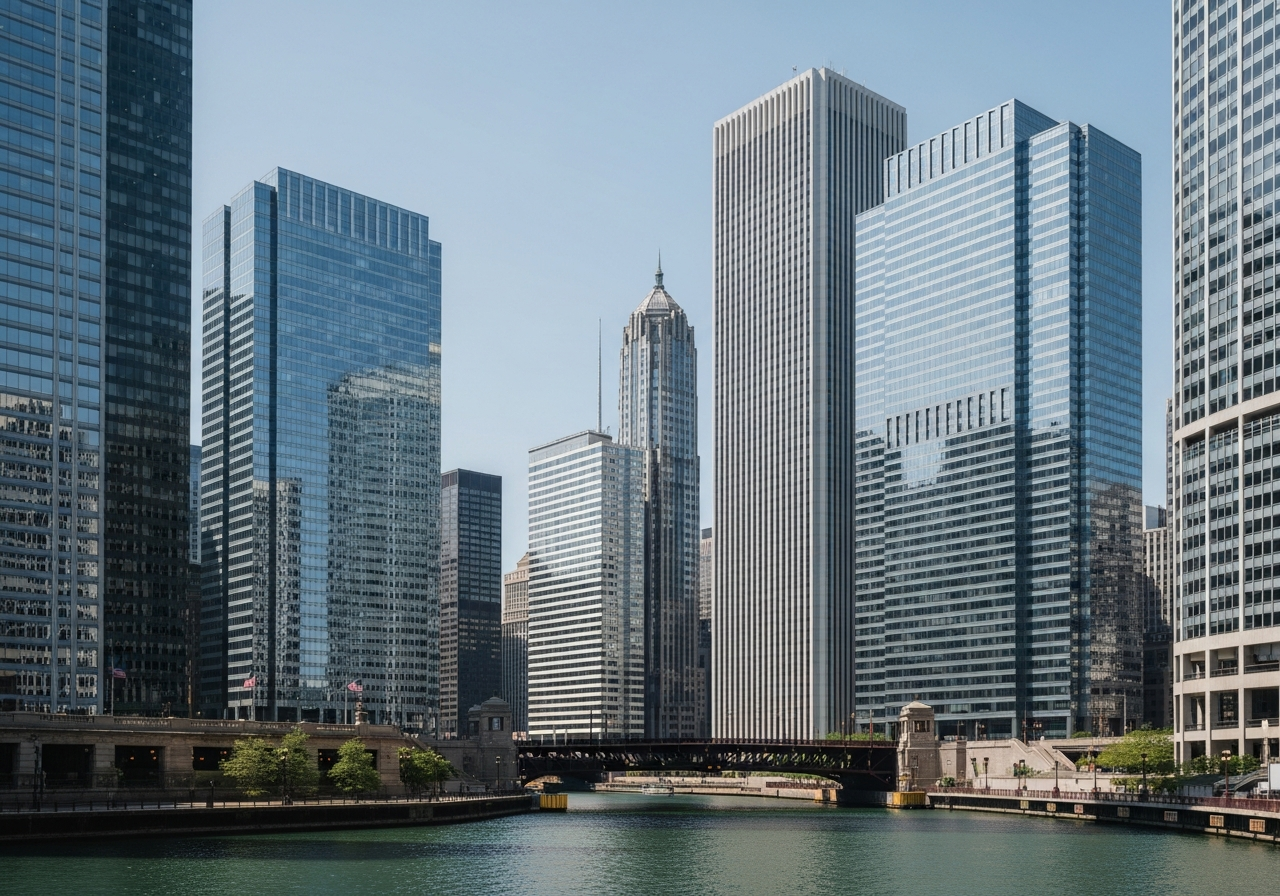
For Illinois residents, the USCIS Chicago Field Office plays a direct role in the adjustment-of-status process. Applicants who file I-485 in the Chicago area are generally scheduled for biometrics at an Application Support Center (ASC) in the region and may later be called in for an in-person interview at the Chicago Field Office, depending on their case type. Processing times at the Chicago Field Office can differ from national averages, and applicants should monitor their specific case status through the USCIS online case status tool. The Chicago Immigration Court, operated by the Executive Office for Immigration Review (EOIR), handles immigration proceedings separately — that system becomes relevant if removal proceedings are involved, but it is a distinct process from a standard family petition.
For consular-processing cases involving Illinois-based petitioners, the NVC manages the overseas portion regardless of where the petitioner lives, but the petitioner's Chicago-area address is part of the sponsorship documentation.
Factors That Can Slow Down — or Speed Up — Your Case
Even within the same category and country, individual cases can move at very different speeds. Here are the most common reasons for delays and a few things that can help.
Common Causes of Delay
- Requests for Evidence (RFEs): If USCIS needs more documentation to verify the relationship, it will issue an RFE. Responding promptly and thoroughly is critical. An incomplete or late response can lead to denial.
- Background and security checks: All applicants go through name and fingerprint checks. Hits that require additional review can pause a case for weeks or longer.
- Missing or incorrect documents: Whether at the USCIS petition stage or the NVC document collection stage, incomplete submissions add time. Always follow the current instructions on the official USCIS or NVC websites, not third-party guides that may be outdated.
- Address or contact changes not reported: USCIS sends notices by mail. If your address changes and you do not update it, you may miss critical correspondence. Use the USCIS online change-of-address tool promptly.
- High global demand and retrogression: As noted above, the Visa Bulletin can move backward, effectively pausing cases that were close to becoming current.
Things That May Help Keep a Case Moving
- File a complete, accurate I-130 with all required supporting documents from the start.
- Respond to any USCIS requests well before the stated deadline.
- Keep your contact information updated with USCIS and the NVC.
- For consular cases, respond to NVC requests promptly during the document collection phase.
- Check the USCIS case status portal regularly and sign up for case status updates if available.
- Monitor the monthly Visa Bulletin so you know when your priority date is approaching the cutoff.
Premium Processing: Not Available for I-130
As of now, USCIS does not offer premium processing for Form I-130. This means there is no fee-based option to expedite standard adjudication. USCIS does have a formal expedite request process for certain genuinely urgent circumstances, but it is granted at the agency's discretion and requires documented evidence of the qualifying urgency. Details are available on uscis.gov.
Putting It All Together: A Realistic Mindset for the Journey
Family-based immigration is, by design, a long process for many people. Understanding the structure helps you set realistic expectations and stay organized for what can be a multi-year journey.
Key Takeaways
- Immediate relatives of U.S. citizens do not wait in a visa number line. Their wait is driven by how long it takes USCIS and the consulate or field office to process their case.
- Preference-category relatives must wait both for USCIS to approve the I-130 and for a visa number to become available based on the monthly Visa Bulletin. In some high-demand categories and countries, the combined wait can span many years.
- Country of birth — not current country of residence or citizenship — determines which column of the Visa Bulletin applies to your relative.
- The priority date is one of the most important numbers in your relative's immigration file. Protect it by filing correctly and early.
- Staying organized throughout the process — keeping copies of everything filed, tracking deadlines, and monitoring case status — is the single most effective thing a petitioner can do while waiting.
A Note on Legal Guidance
This article is general educational information about how the system works. It is not legal advice, and no article can substitute for a conversation with a qualified immigration attorney who can review the specific facts of your family's situation. Immigration law has many nuances — derivative beneficiaries, aging-out rules, bars to adjustment, prior immigration history — that can significantly affect outcomes. If you have questions about your specific case, consulting with a licensed immigration attorney is always worthwhile.
For Illinois families navigating this process, resources like the USCIS Chicago Field Office and the official USCIS website remain the most reliable sources of current, case-specific information. Government processing times, fees, and procedures can and do change; always verify current requirements directly with the official agency.
Frequently Asked Questions
The editorial team researches and writes plain-language immigration information, drawing on official government sources and reviewing each page for clarity and accuracy.
Sources & Citations
- [1]Official Government Source: USCIS – Form I-130, Petition for Alien Relative
- [2]Official Government Source: U.S. Department of State – Visa Bulletin
- [3]Official Government Source: USCIS – Check Case Processing Times
- [4]Official Government Source: USCIS – Adjustment of Status (Form I-485)
- [5]Official Government Source: USCIS – Visa Bulletin Information for Adjustment of Status Applicants
More immigration insights
Insights


Need help with your immigration case?
Our experienced Chicago immigration attorneys offer flat-fee consultations to review your case and outline clear next steps.
Request a Consultation